
Monstera Care Guide: Light, Water, Support, and Why the Holes Come Later
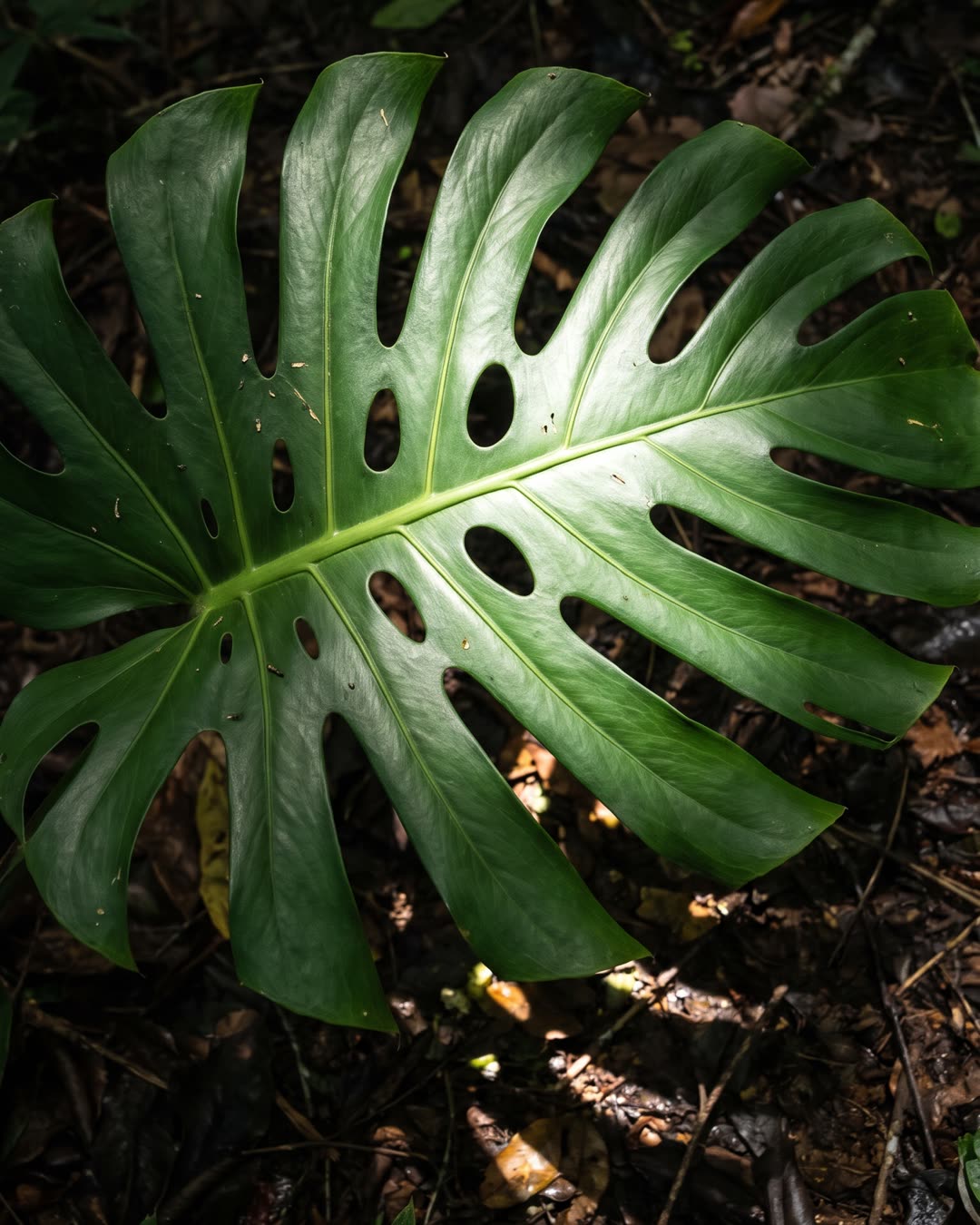
The Monstera is the plant most people picture when they think of a green, leafy home. It is also one of the most forgiving houseplants you can buy. Give it a few things it truly cares about, and it rewards you with huge leaves, then the famous splits and holes.
This guide covers what a Monstera deliciosa needs, in the order that matters most: light, water, soil, support, and the seasons. At the end, we answer the question we hear most: why does my Monstera have no holes?
Light: the one that matters most
Monstera grows on the floor of tropical forests and climbs up tree trunks toward the canopy. Its whole life is a search for light, and indoors, light decides almost everything about how it grows.
- Best spot: bright, indirect light. Close to a window, but out of hours of harsh direct sun. An east-facing window, or a few steps back from a south or west window, works well.
- A little direct sun is fine: gentle morning sun helps. Strong afternoon sun through glass can scorch leaves and leave pale or brown patches.
- Too little light: the plant survives, but it grows slowly, stretches toward the window with long stems, and puts out small leaves without splits.
Because it leans toward the light, give the pot a quarter turn every week. We explain why in Why You Should Rotate Your Monstera Every Week.
Water: soak, then wait
Monstera likes a deep drink followed by a short dry spell. It does not like to sit in wet soil.
- Water when the top 3 to 5 cm (about 2 inches) of soil feel dry.
- Water slowly until it runs out of the drainage holes, then empty the saucer.
- In spring and summer that is often once a week; in autumn and winter it can be every two weeks or less. Check the soil, not the calendar.
Overwatering is the most common way Monsteras get into trouble. Yellow lower leaves, soil that never dries and a sour smell are the early signs. Our guide to the 10 signs you are overwatering walks through them.
Soil and pot
In nature, Monstera roots hold on to bark and grab air as much as water. A dense, peaty soil that stays wet for days works against that.
- Mix: a chunky, airy mix. Regular potting soil with a good amount of orchid bark and perlite added is a simple version.
- Pot: always with drainage holes. Go up only one size when you repot.
- Repotting: every one to two years, in spring, when roots circle the pot or poke out of the bottom.
Support: give it something to climb
This is the step many people skip. Monstera is a climber. In the forest, its stems attach to tree trunks with aerial roots and climb toward brighter light, and as it climbs, it produces bigger, more mature leaves.
A moss pole, a coir pole or a sturdy stake gives your plant that trunk. Tie the main stem loosely to it, and guide the aerial roots toward the pole. Those brown, rope-like aerial roots are normal and healthy; you do not need to cut them.
Humidity, temperature and feeding
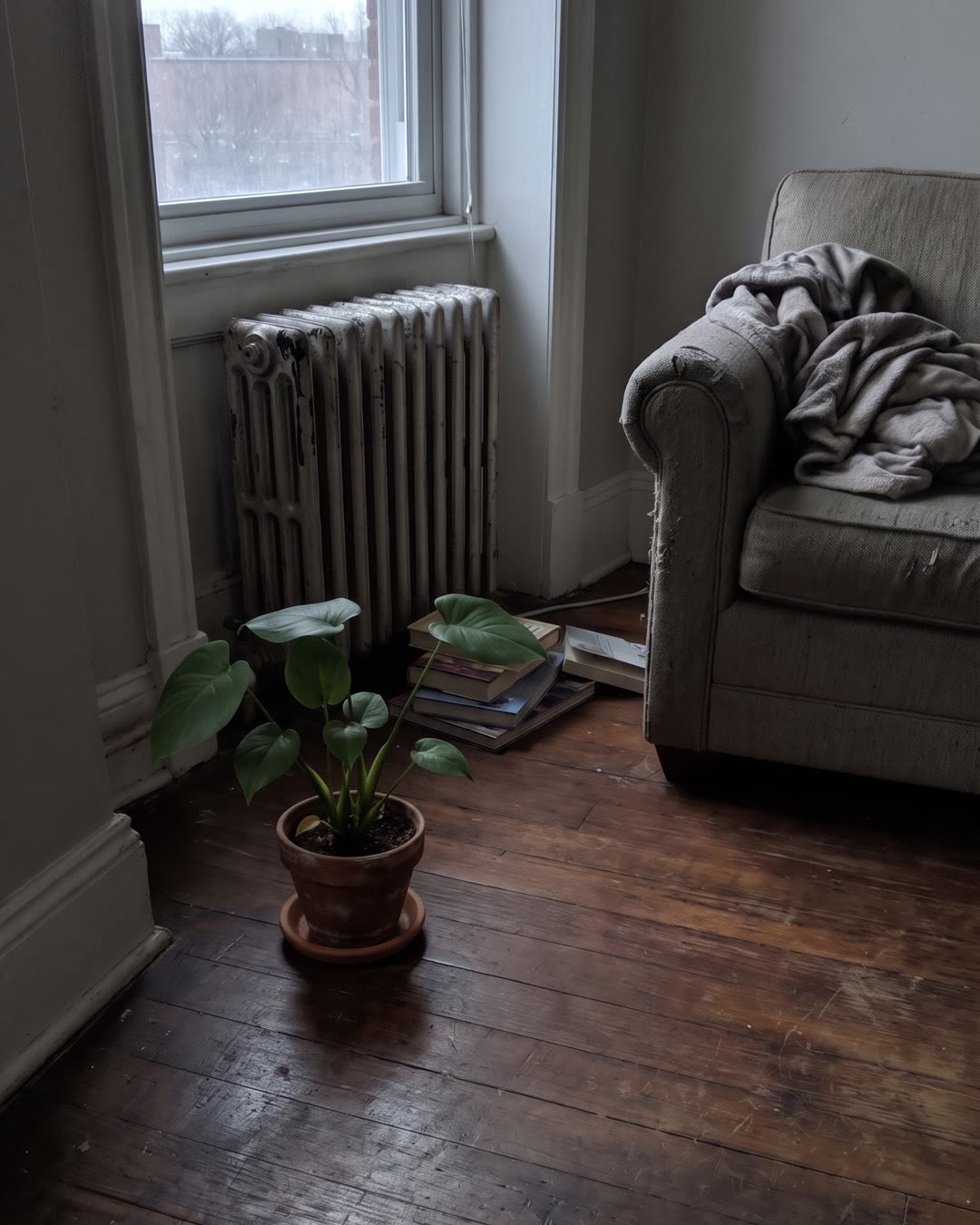
- Humidity: normal room humidity is usually fine. In very dry, heated rooms, leaf edges can turn brown and crispy. Grouping plants together or keeping the plant away from radiators helps.
- Temperature: roughly 18 to 27 °C (65 to 80 °F) is ideal. Keep it away from cold drafts, and do not let it sit below about 12 °C (55 °F).
- Feeding: a balanced liquid fertilizer once a month in spring and summer. Pause or cut back in autumn and winter, when growth slows.
- Cleaning: wipe the leaves with a damp cloth now and then. Dust blocks light.
Monstera in autumn and winter
Shorter days mean less light, and your Monstera slows down. That is normal, not a problem to fix.
- Move it closer to the window if it sits deep in the room.
- Water less often, and let the soil dry a bit more between waterings.
- Keep it away from radiators and cold window glass at night.
- Stop feeding until spring.
New leaves may be smaller in winter. Growth picks up again in spring.
Why does my Monstera have no holes?
This is the question we hear most, so it gets its own section.
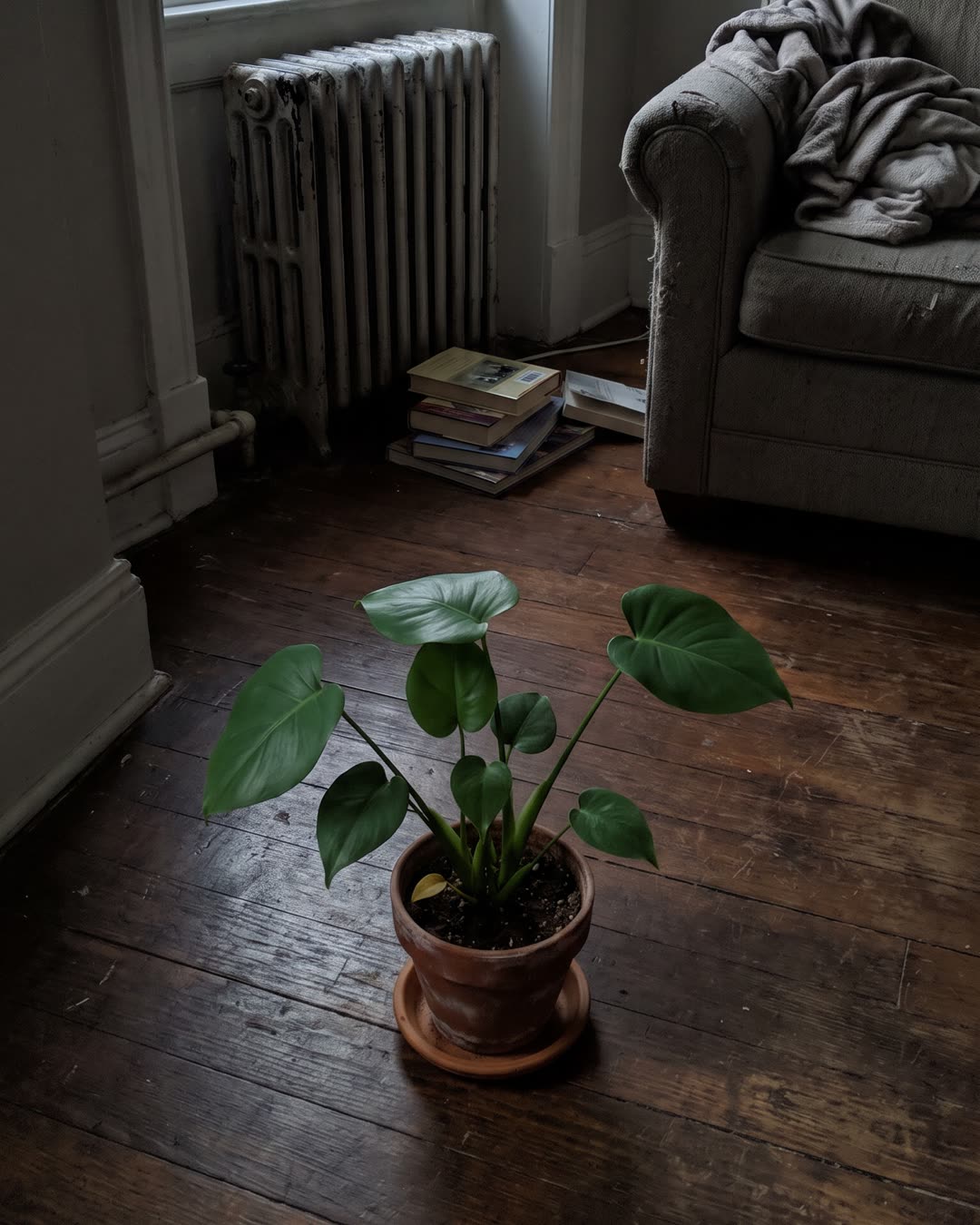
Young Monstera leaves are solid. The first leaves are small, heart-shaped and have no splits or holes. This stage is completely normal. The holes, called fenestrations, appear as the plant matures. There is no fixed age or leaf count: some plants show their first splits within a year, others take much longer.
Why the holes exist is still an open question in plant science, and several ideas have been put forward. One of the best known comes from a 2013 study by Christopher Muir in The American Naturalist. On the rainforest floor, sunlight does not arrive evenly. It comes in small, moving patches, called sunflecks, that slide across the ground as the canopy moves. Muir's model suggests that a leaf with holes can spread the same amount of tissue over a wider area. A wider leaf is more likely to be touched by those moving patches, so the light it catches is steadier from hour to hour. Seen this way, the holes are not damage. They are a way of reaching further with the same leaf.
What helps your plant grow mature, split leaves:
| What it needs | Why |
|---|---|
| Bright, indirect light | The single biggest factor. In dim corners, leaves stay small and solid. |
| Something to climb | Climbing is how Monstera matures in nature; supported plants tend to produce larger leaves. |
| Steady care | Regular watering, airy soil and feeding in the growing season keep new leaves coming. |
| Time | The change shows on new leaves first. Old leaves will not grow holes later. |
If your plant has been in a dark spot, moving it closer to a window is the first thing to try. Then be patient and watch the next leaves.
Common problems at a glance
| What you see | Likely cause | What to do |
|---|---|---|
| Yellow lower leaves, wet soil | Overwatering | Let the soil dry more; check drainage |
| Brown, crispy leaf edges | Dry air or underwatering | Water thoroughly when dry; move away from heaters |
| Drooping, dry soil | Thirst | Water deeply, then return to a regular rhythm |
| Long stems, small leaves, no splits | Too little light | Move closer to a window; add a support |
| Pale or brown patches | Strong direct sun | Move out of harsh afternoon sun |
Is Monstera safe for pets?
No. Monstera contains calcium oxalate crystals, which irritate the mouth and stomach. It is listed as toxic to cats and dogs by the ASPCA. Keep it out of reach of pets that like to chew leaves.
The short version
Bright, indirect light. Water when the top of the soil is dry. An airy mix and a pot with drainage. Something to climb. Less water and no fertilizer in winter. And patience: the holes come with maturity, one new leaf at a time.
Want to see the holes explained in under 20 seconds? Find our short video on Instagram and TikTok.